
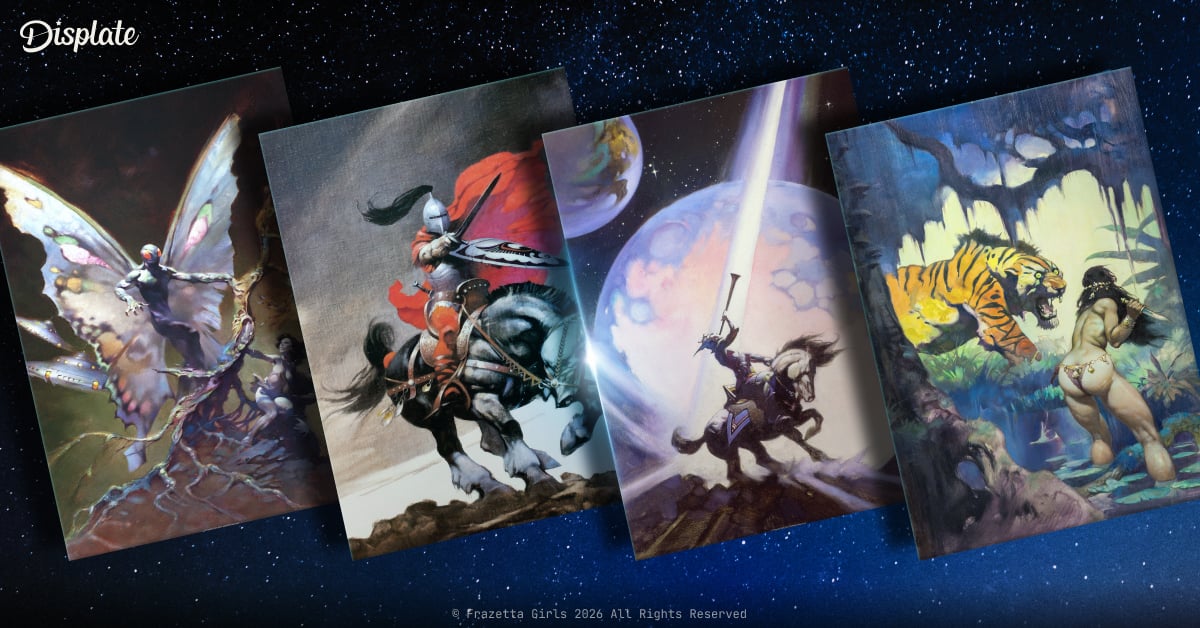
Frank Frazetta. For anyone with even a passing interest in fantasy art, the name instantly brings to mind some of the most iconic imagery in the genre. Conan the Barbarian raising his sword against a backdrop of fire. Death Dealer riding into battle. Tarzan charging through the jungle. Decades after they were first painted, Frank Frazetta’s artworks still define the look and feel of fantasy illustration.
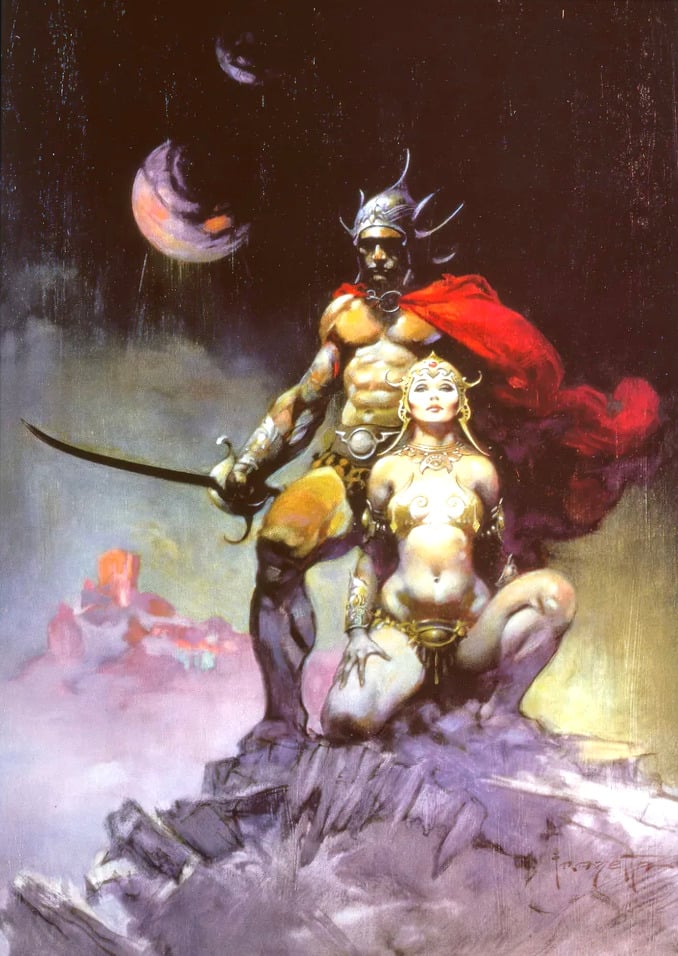
Often referred to as the “Godfather of fantasy art”, Frazetta transformed pulp book covers, comics and poster art with his dramatic compositions, moody lighting and larger-than-life characters. His paintings helped shape the visual identity of sword-and-sorcery storytelling and influenced generations of artists, filmmakers and game designers in the process.
Early Years and Career in Comics
Frank Frazetta was born into a Sicilian family in Brooklyn, New York, in 1928. A child prodigy, he started drawing practically as soon as he could hold a pencil. At the age of eight, his parents enrolled him in the Brooklyn Academy of Fine Arts, his first (and only) art class.
As a sixteen-year-old, he broke into commercial art, doing fill-in work on comic books and even publishing his own strip called Snowman. It marked the beginning of a comics career that would span more than two decades.
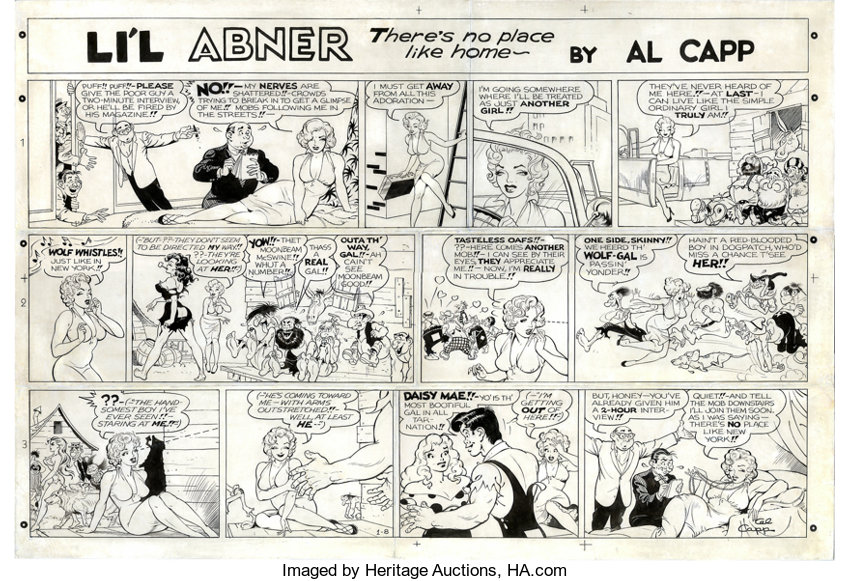
During this time, the young artist would try his hand at everything from westerns to humor to crime stories. His landmark Buck Rogers covers for Famous Funnies, along with art contributions to EC Comics, caught the attention of none other than Al Capp, who offered him a job on his uber-popular strip, Li’l Abner.
Frazetta later worked on a solo creation, Johnny Comet, and helped out on Flash Gordon, among his other credits. He also created Little Annie Fanny for Playboy magazine, a stint that helped him support his growing family when comic books hit a rough patch in the late 1950s.
From Comic Strips to Pulp Heroes
In the 1960s, Frazetta’s career moved into new territory, helping establish him as one of the defining fantasy artists of the 20th century. It was during this period that he left comics behind and started pouring his creative energy into pulp book covers, a medium that would become closely associated with his signature artistic style.
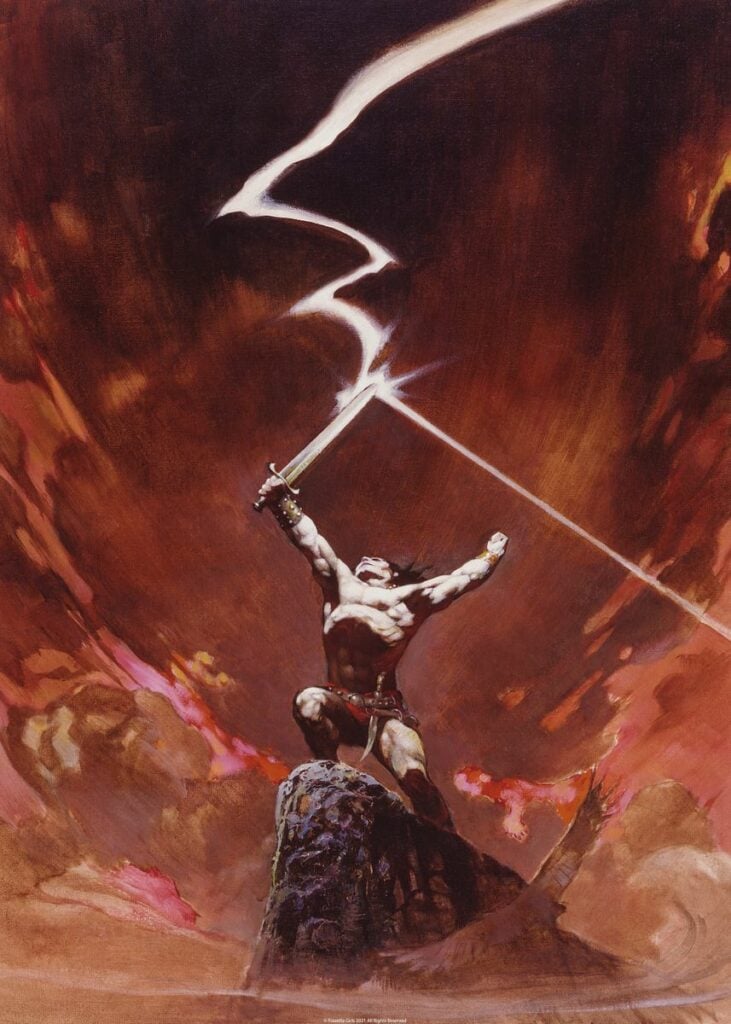
Notable examples include his work on the Edgar Rice Burroughs titles (Tarzan, John Carter of Mars, Pellucidar, and others) and his interpretation of Robert E. Howard’s Conan the Barbarian.
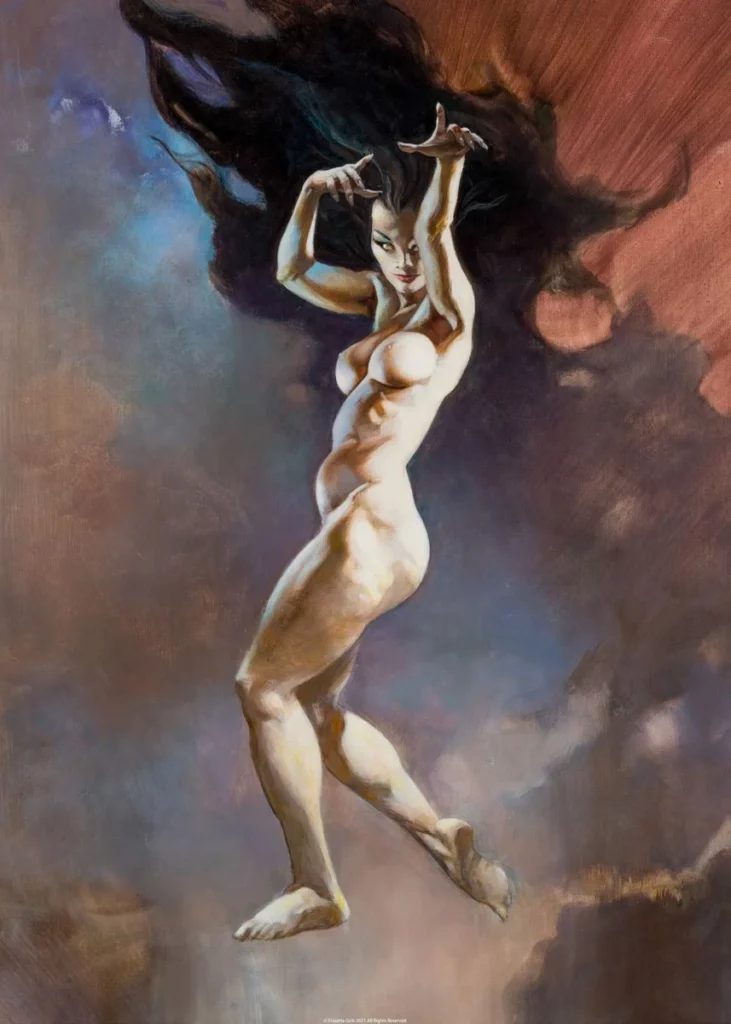
His paintings were known for their sense of movement, energy and dramatic composition, as well as their depiction of the human form in all its sensuality and strength. From the beginning, his artwork stood apart to the point where readers frequently bought the novels for the covers alone. Publishers quickly competed for his artwork, often finding books to match his paintings rather than the other way around.
In the meantime, a 1964 caricature of Ringo Starr for Mad Magazine earned Frazetta his first Hollywood gig, the movie poster for What’s New Pussycat? by Woody Allen. More poster commissions followed, including After the Fox (1966), The Fearless Vampire Killers (1967), The Night They Raided Minsky’s (1968), and The Gauntlet (1977).
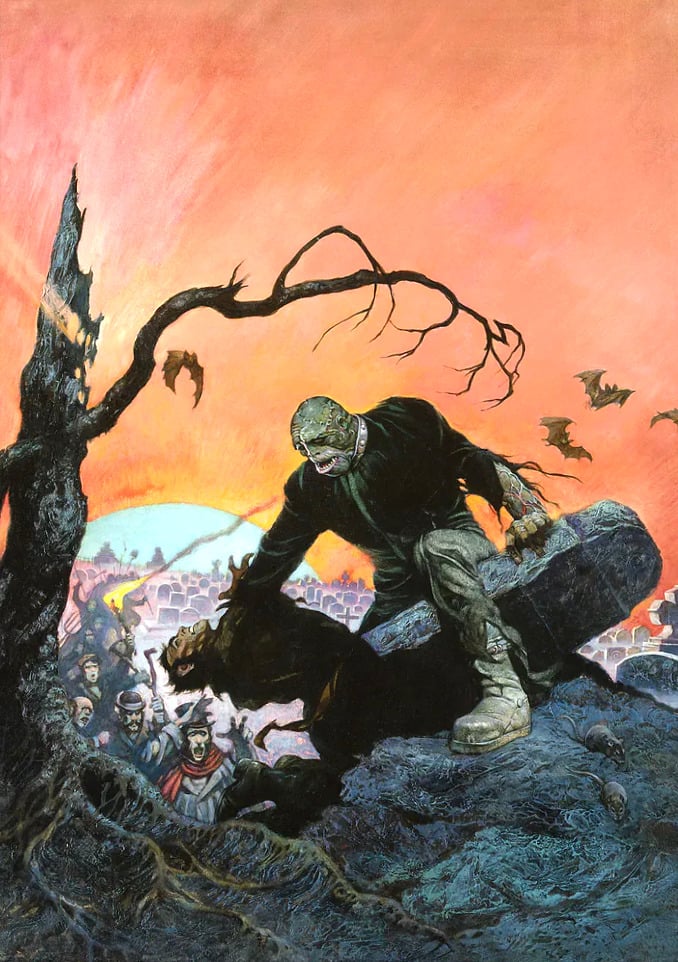
At roughly the same time, Frazetta’s career as a cartoonist came full circle when he joined his former EC colleagues at Warren Publications and created a string of memorable covers for Creepy, Eerie and Vampirella, further strengthening his reputation within fantasy and horror illustration.
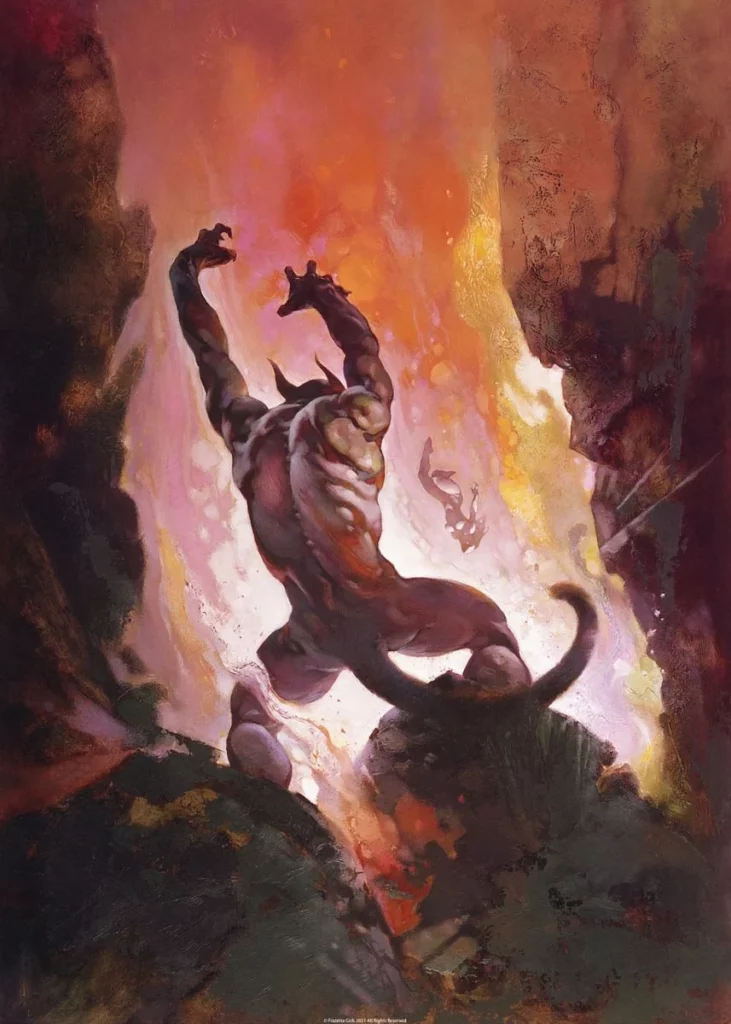
By the 1980s, Frazetta’s style had permeated every corner of pop culture, inspiring countless artists across fantasy, comics and film. His cover art had already gained a cult following, bringing a generation of readers into the sci-fi and fantasy world while redefining the visual identity of the genre. Blockbuster film posters only added to his influence, alongside album covers for Molly Hatchet, Nazareth and Herman’s Hermits, to name a few.
So what was it about Frank Frazetta’s artistic style that made his work so influential?
Frank Frazetta’s Art Style
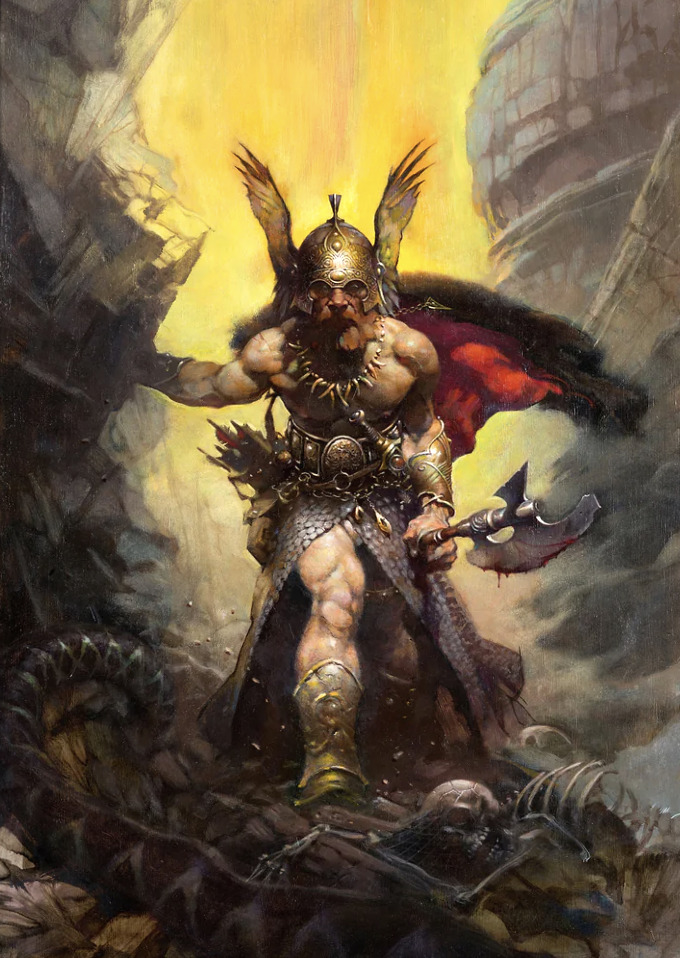
Frank Frazetta’s art style is instantly recognizable for its moody color palettes, dynamic compositions and intense sense of movement. Whether working in oils, ink or watercolor, Frazetta created fantasy paintings that felt cinematic long before fantasy films dominated popular culture. His characters were almost always larger than life, from towering barbarian warriors and mythical beasts to powerful heroines and sinister demons.
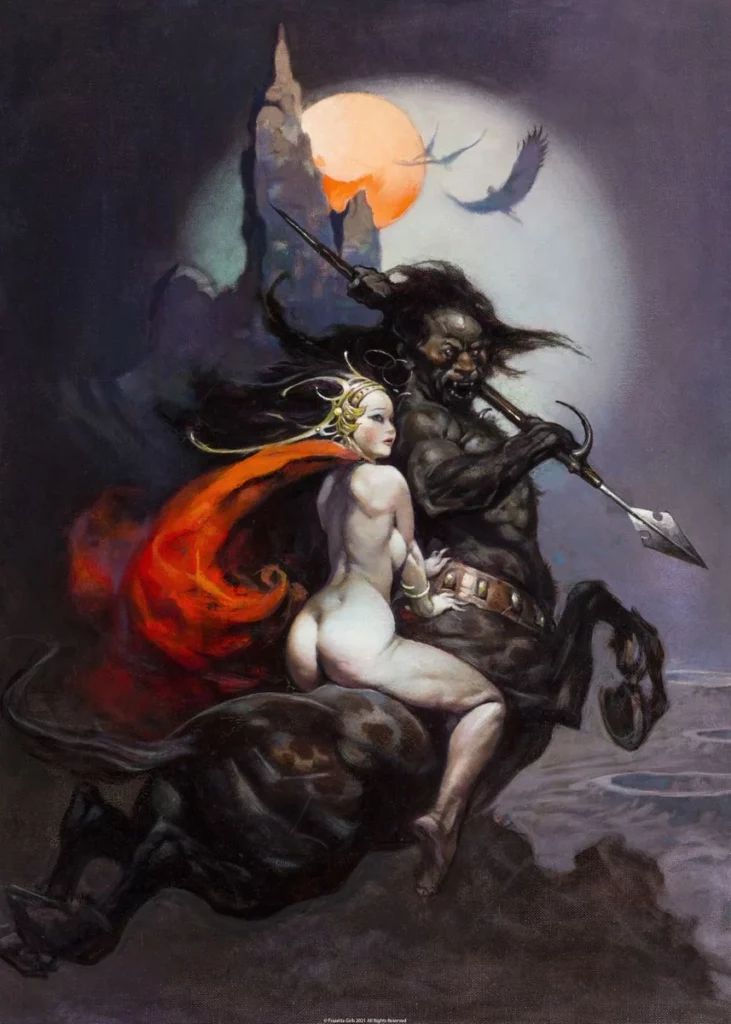
Many of his most famous paintings, including Death Dealer, Conan the Barbarian covers, and Egyptian Queen, place these archetypal figures in dramatic fantasy settings filled with danger, tension and raw energy. Dark forests, burning wastelands and stormy landscapes became recurring elements throughout Frank Frazetta’s artwork, helping define the visual identity of fantasy art for generations to come.
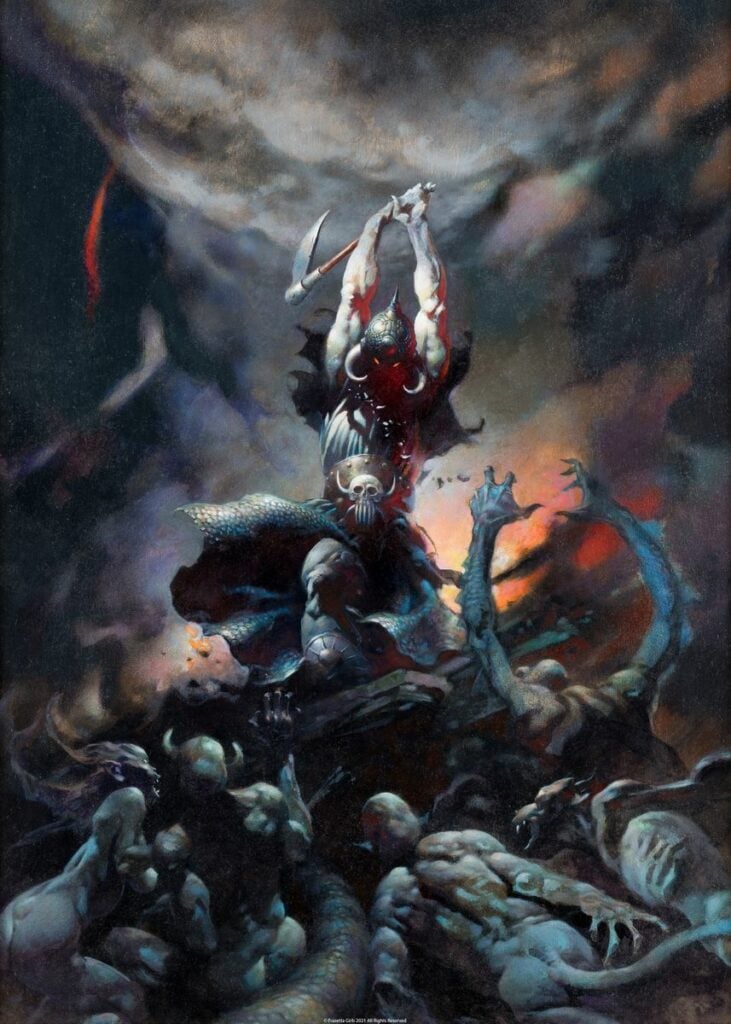
Part of what made Frazetta’s paintings feel so distinctive was his use of lighting and composition. Unlike many pulp artists of the era who favored bright, exaggerated colors, Frazetta often worked with darker, earthier tones that gave his fantasy scenes a sense of realism and atmosphere. His painterly brushwork and anatomical detail added weight and physicality to every figure, making even the most surreal moments feel believable.
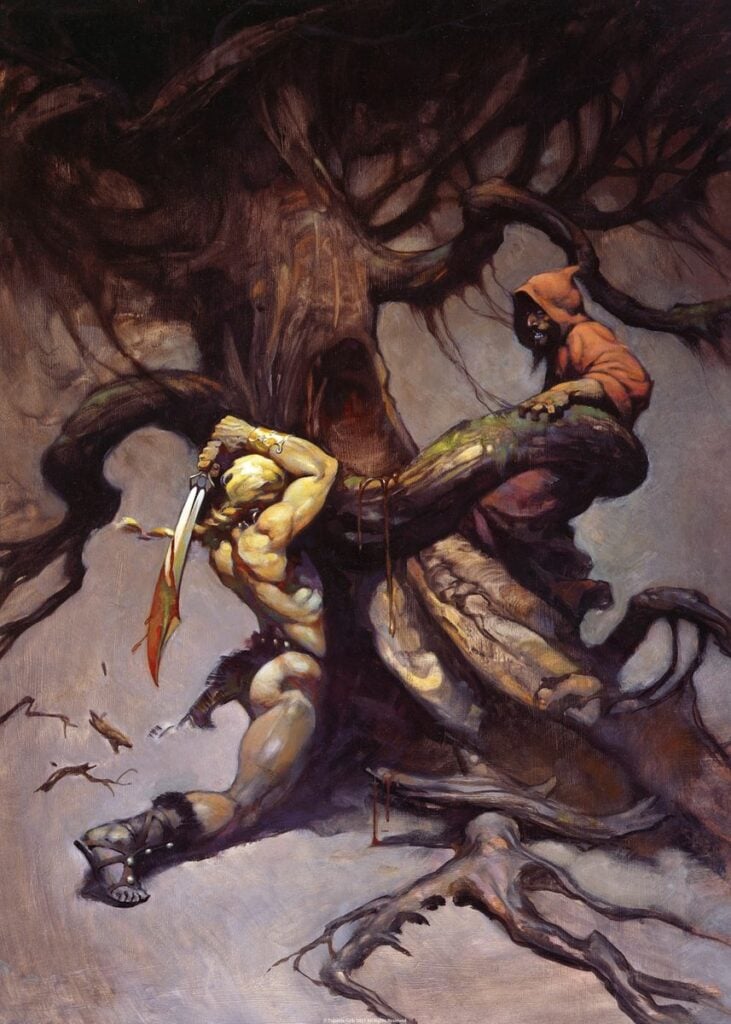
At the same time, Frazetta had a remarkable ability to capture movement mid-action. Whether depicting a warrior locked in battle or a creature moments away from attacking, his paintings often feel frozen in the middle of a larger story.
That cinematic sense of tension became one of the defining characteristics of Frank Frazetta’s art style and remains hugely influential across fantasy illustration, comics, gaming and film today.
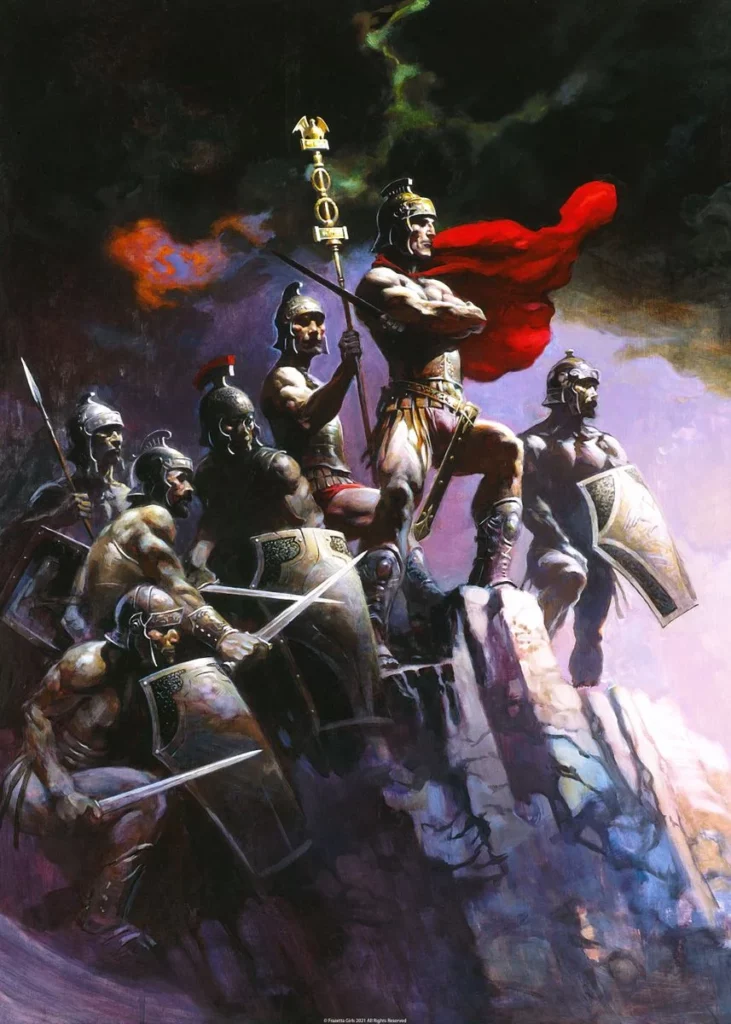
But perhaps Frazetta’s greatest achievement was bridging the gap between classical fine art and commercial illustration. Looking at works like Seven Romans, it’s easy to understand why he was sometimes referred to as the “Rembrandt of barbarians”. His artwork combined painterly craftsmanship with the bold spectacle of pulp fantasy, creating images that still feel timeless decades later.
Frank Frazetta’s Lasting Legacy
Frank Frazetta passed away in 2010 at the age of 82, leaving behind one of the most influential legacies in fantasy art history. Across his career, he received numerous industry honors, including induction into the Will Eisner Comic Book Hall of Fame in 1995, the Society of Illustrators Hall of Fame in 1998 and the Jack Kirby Hall of Fame in 1999.
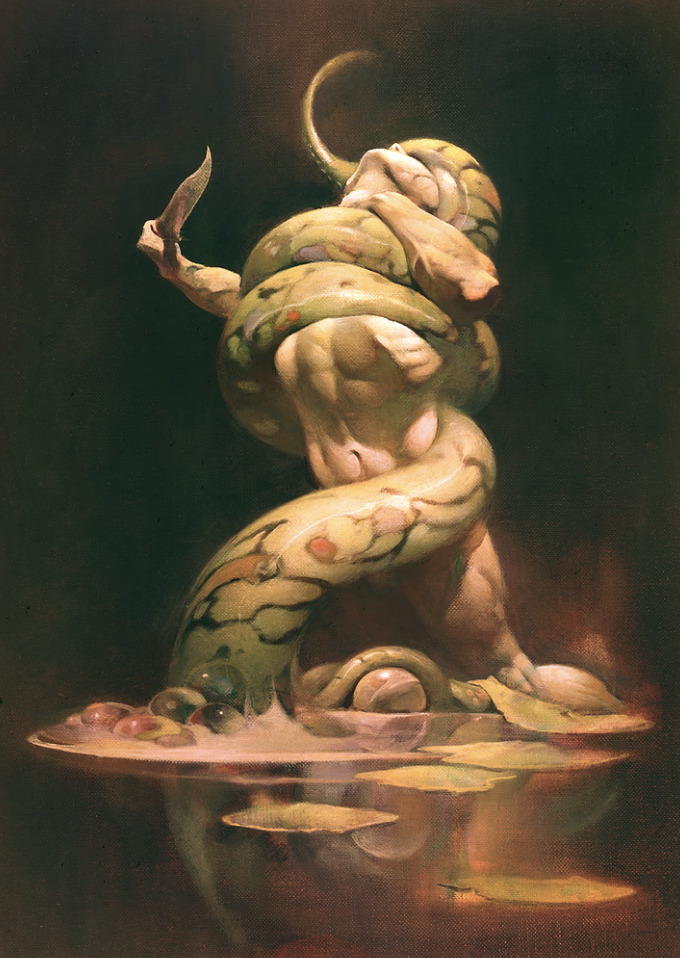
Over the decades, Frank Frazetta’s paintings have become some of the most sought-after works in fantasy art collecting. Early sketches that once sold for just a few dollars are now worth millions, with collectors continuing to drive record-breaking prices for his original artwork.
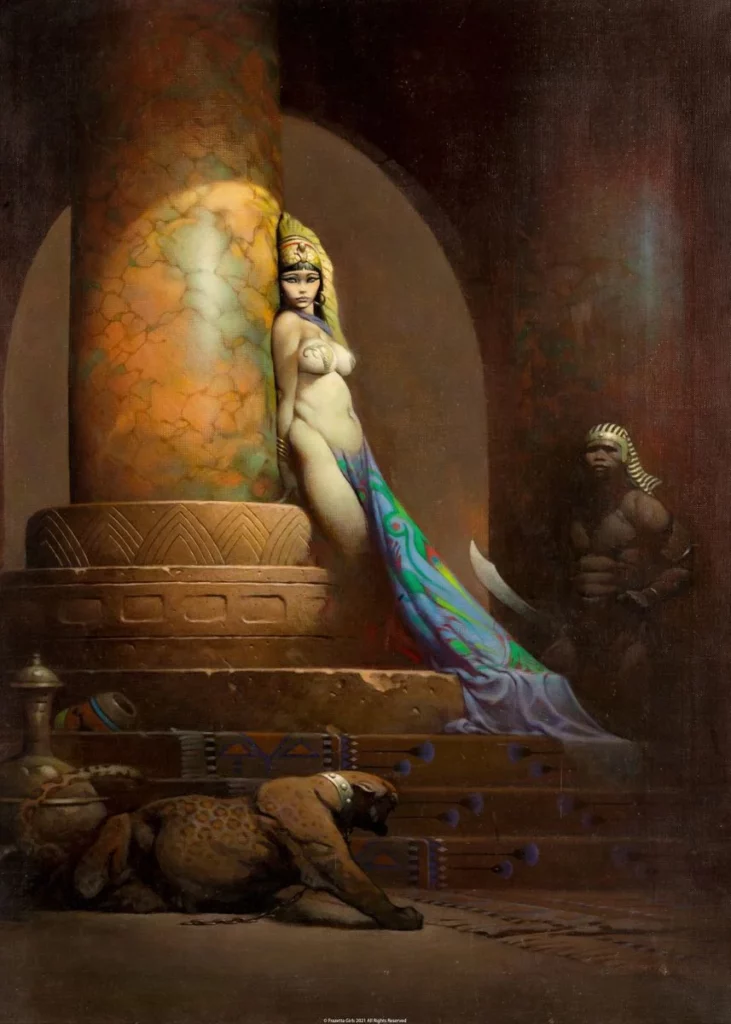
In 2025, Frazetta’s 1966 painting Man Ape, often associated with Conan the Barbarian, sold for an astonishing $13.5 million, making it the most expensive Frank Frazetta painting ever sold. Other famous works, including Egyptian Queen and Death Dealer VI, have also achieved multimillion-dollar sales, further cementing Frazetta’s status as one of the most collectible fantasy artists of all time.
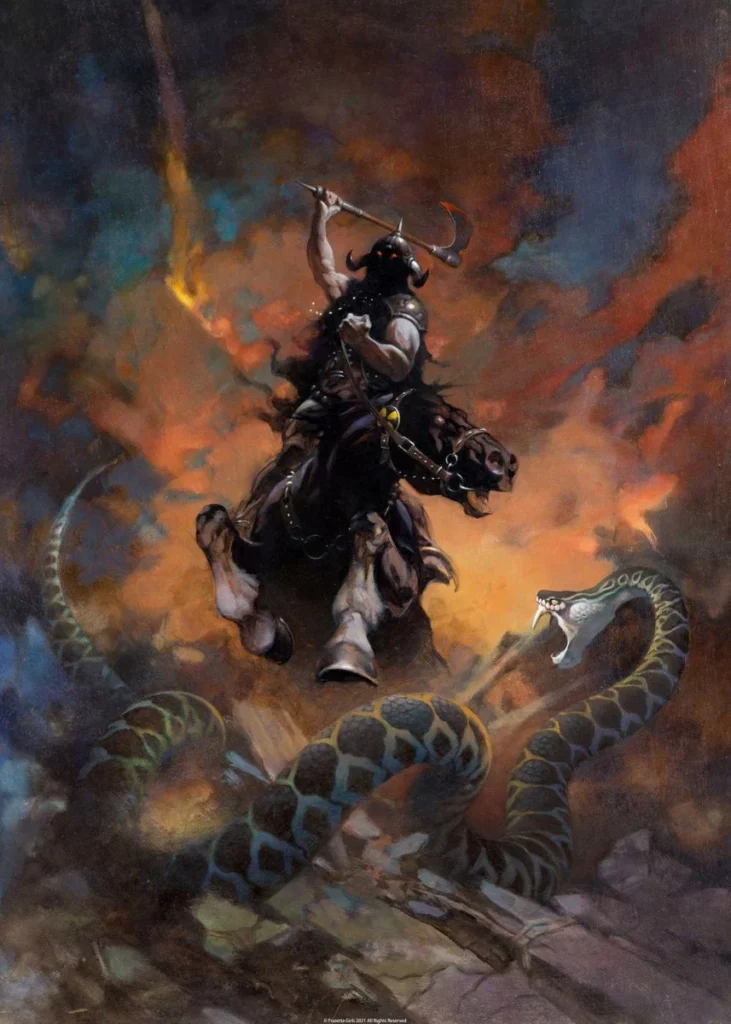
Beyond auction houses and private collections, Frazetta’s influence can still be seen throughout modern fantasy culture. His artwork helped shape the visual language of fantasy illustration, inspiring generations of comic artists, filmmakers, game designers and concept artists. Elements of his style continue to appear across everything from heavy metal album covers and RPG artwork to blockbuster fantasy films and video games.
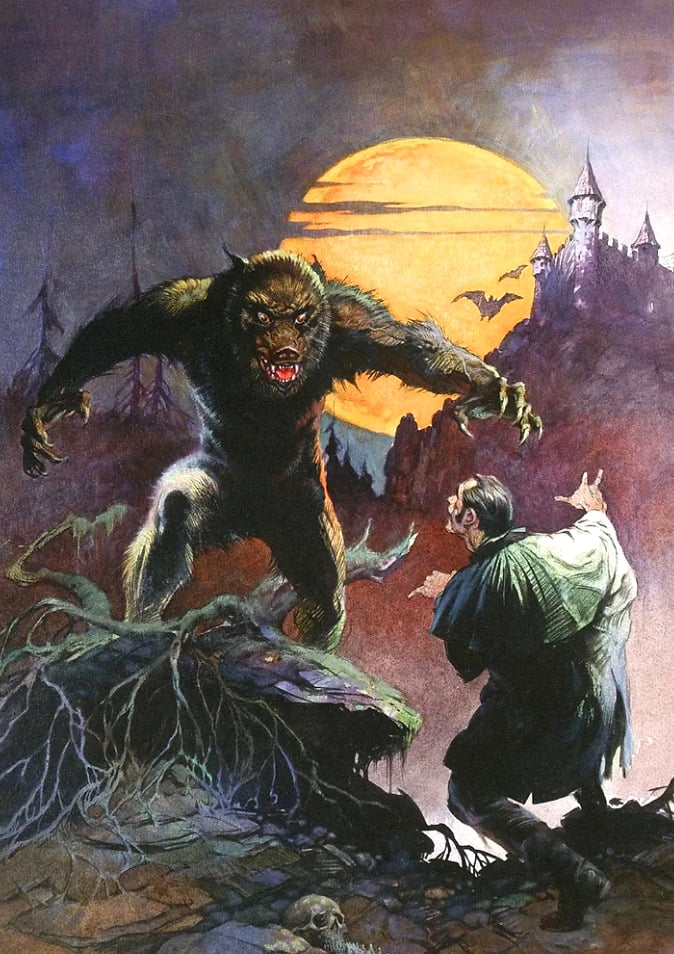
Frazetta’s family has continued celebrating and protecting his work through the Frazetta Art Museum in East Stroudsburg, Pennsylvania, which houses the world’s largest collection of his original paintings, sketches and personal archives. His family also runs Frazetta Girls, the official brand dedicated to preserving and celebrating his work through licensed artwork, exhibitions and collectibles.
For fantasy art fans, Frank Frazetta’s paintings remain as striking and recognizable today as they were decades ago. Displate’s official Frank Frazetta collection brings some of his most celebrated fantasy artworks to metal posters, including iconic pieces inspired by Conan the Barbarian, Death Dealer and other classic fantasy worlds.
Why Frank Frazetta Still Matters
Frank Frazetta’s artwork continues to resonate because it captures everything people love about fantasy worlds: danger, adventure, mythology and larger-than-life storytelling. Decades after his paintings first appeared on book covers, his unmistakable style still shapes the look of fantasy across comics, gaming, film and collectible art.
Whether it’s the dark atmosphere of Death Dealer, the raw energy of his Conan the Barbarian paintings or the cinematic scale of his fantasy landscapes, Frazetta’s work still feels timeless. His paintings did more than depict fantasy worlds; they shaped how audiences imagined them.
For fans of fantasy art, sword-and-sorcery storytelling and classic illustration, Displate’s official Frank Frazetta collection features some of his most celebrated artworks as premium metal posters.
You can also explore Displate’s wider range of fantasy-inspired designs, including artwork inspired by dark fantasy, mythology, RPGs, classic sci-fi and legendary comic book worlds.
