
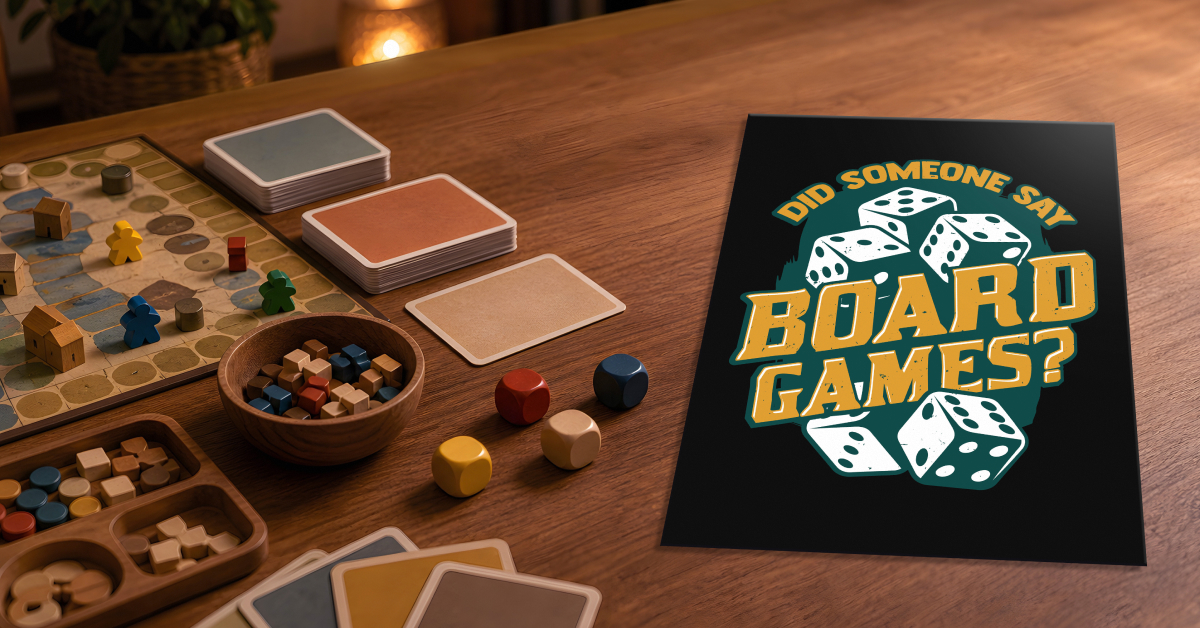
From modern classics like Catan and Ticket to Ride to all-time favorites like Battleships and Cluedo, there are hundreds of excellent board games out there.
In recent years, there’s been a huge resurgence in the popularity of board games. Board game sales are through the roof, and tabletop gaming is expanding to new audiences each year, with things like board game cafes springing up across the globe. Board game nights are also making a comeback, with couples, friends and families ditching going out in favor of cosy nights in playing Monopoly.
If you want to get in on the action and create a board game of your own, consider this your guide. From crafting the game mechanics and board design to testing gameplay, follow these steps and turn your board game dreams into a playable reality.
The Main Phases of Board Game Creation
Board game creation can be broken down into 3 core phases:
- Prototyping – Developing the game’s concept, purpose, rules, mechanics, and creating a sample.
- Playtesting – Playing the game by yourself and with others to identify any faults or issues.
- Publishing – Submitting your game idea to a publisher, or crowdfunding your game to self-publish it.
Prototyping Your Board Game
Establish a Solid Game Concept
First things first, you’ll need to map out your game’s concept. Whether an idea came to you in a dream or you’ve been scoping out a game idea for months, it needs to be documented and thought through carefully.
Choosing a Theme
The easiest place to start is establishing a game theme. The hardest part is sticking to it. If you’re stumped for ideas, why not go window shopping for some inspiration. There are plenty of games on the market right now that defy genre and offer some really unique gameplay. Hues and Cues, for example, is a colour-matching descriptive game with a simple but effective theme. Wingspan, an immensely popular new nature game, takes bird species as its theme.
It helps if the game’s theme is something you’re interested in — be it property, oceans, fantasy, the seasons, trading, or even rail travel. Write it all down and even use visual tools like Pinterest to help you bring your theme to life, with sample imagery and vision boards.
Game Mechanics
To turn your game concept into a playable game, you need to come up with a “problem” or a “challenge” related to your theme that players need to overcome, to function as the crux of gameplay. Sometimes, this might be your starting point, and you’ll develop a theme to act as a backdrop to the action later. Ask yourself:
- Will players need to collect certain tokens to complete a set?
- Is the game against the clock?
- Must players navigate a map and avoid certain areas?
- Is it a game of survival? Or perhaps one of strategy?
You’ll also need to consider the tools and accessories with which you’ll bring your game to life. Think about what your players will need in order for them to tackle the game’s challenge(s) and complete the game.
You can afford to think outside the box here, too. Interactive games with fun elements always go down a treat, and are often much more engaging than simple dice roll games or card shuffles. Why not consider:
- Using dice with icons or spinners to decide actions and events
- Pieces and cards that can be “bought” in the game with currency
- Player figurines that have different abilities or “powers”
- Obstacle or “blocker” pieces — the choice is yours!
Write The Rulebook
In order to make things competitive and controlled, though, there have to be rules of play — the dos and don’ts of your game. Save yourself some editing time later and write these out plainly, as if first-time players were reading them. Some things to consider at this stage include:
- Age restrictions for the game (based on complexity or content)
- Number of players
- What actions do the players need to perform?
- Should players interact with one another?
- Are there conflicts or battles?
- Do certain parts of the board perform certain functions or have designated effects?
Decide What Makes a Winner
Then — the good part — how do players win? What defines success in the world of your game? Again, looking at other popular games is a great idea for some “market research” when it comes to winning frameworks.
- In Cluedo, you win by guessing the murderer correctly.
- In Isle of Cats, you win based on the total value of your cat families and food plan covered.
- In Ticket to Ride, you win based on the points you get from building routes between cities.
This step is crucial as it gives direction to the rest of the gameplay. “What’s the aim of the game?” is a critical question that will be asked by every player that interacts with your game, so make it a meaningful one.
Develop The Prototype
Now it’s time to bring your game to life. During the early stages of development, you’ll need to roll your sleeves up and get crafty, sketching out and assembling a sandbox version of your game yourself to demonstrate how it works.
Mock Up The Board & Pieces
Sketch out the board of your game on a large, flat surface. If you don’t have any spare cardboard lying around, you can buy game boards to help make your prototype feel professional.
The design doesn’t have to be super intricate at this stage; just make it playable. The same with your pieces and accessories. For now, even modelling clay or mini cardboard replicas will be fine — they might change in design slightly anyway. If your game is card-based, you could design your cards on a tool like Canva and print them out onto paper at this stage.
Testing Your Game
After you’re happy that your sample board, pieces, and cards can facilitate the gameplay and mechanics you had in mind, it’s time to test things out.
Play, Play, Play
Play the game in its entirety by yourself, pretending to be multiple players, before inviting some friends or family to give it a go. Ask for their feedback throughout the game and after — especially on things like:
- Ease of understanding
- Smoothness of play
- How the game makes them feel
- Game difficulty and accessibility.
It’s a good idea to really try to push the game’s limits during this phase — try to “break it” if you can by finding any loopholes you might have missed. For example: if you send your players to jail with an imprisonment card, but they have a reverse card, could they wrongly swap places with another player?
Encourage your game critics to go over the rulebook too, and really try to find areas that could be improved upon. As a final tip, if you’re able, vary your sample players as much as possible — from your kid brother to your great aunt Gertie. Did they enjoy it the same? Could they both comprehend the instructions?
Make Any Gameplay Amendments
Not to get all science-y, but this stage really is like an experiment. You’ll need to analyse your findings from the testing phase and make necessary adjustments to your product.
For ease, make yourself a master rule book — one that has everything from annotations to suggested changes — and a separate condensed version that will become the finished, player-facing product once you’re happy.
Refine The Prototype
The final stages are all about refining your game. So, here’s where your artistic skills need to kick in. Produce a V2 design of your game board, with all the bells and whistles on (it helps if you have a talented artist friend for this).
Why not use our poster designs for some inspiration? From space to maps, we’ve got plenty of designs that could be used to inspire the finished visuals of your game. Similarly, now’s the time to level up your game’s pieces by buying or making more permanent accessories — you could even get custom pieces 3D printed. There are plenty of businesses out there that offer professional printing services for cards and boards, too — for example, Make Playing Cards or The Game Crafter.
Publishing Your Game
The last thing to do is to get your game out there, but it’s up to you how you do this.
Submit to Publishers
The first option for bringing your game to the masses is to take it to a publisher and try your luck. Like book publishing, the market is very competitive, so it’s not guaranteed that anywhere will take your game — but it’s definitely worth a try. Do your research for each company you want to pitch to (since they all have different application processes), and remember the following things:
- Build an online profile for your game. Create social media accounts and post regularly to amass hype and a following. Publishers are more likely to take your game seriously if it has an established brand.
- Network like your life depends on it. If you’re able, take your idea to numerous game conferences and put roots down in the industry.
- When pitching, be sure to highlight the core aim of your game and what makes it unique for players (compared to other games on the market right now).
Sell DIY Versions
If you want to get people playing your game without publishing, you could always sell digital versions online. That way, people can pay to download the files and print the game themselves. This may not be the best option for games with complex mechanics and numerous accessories — but it works well for card games and simple tabletop board games.
Self Publish
If you don’t want to take your game to a publisher, you could always publish it yourself.
The gaming community is strong, and there have been numerous successful examples of crowdfunding projects for board games. If you’re going down this route and trying to raise funds, be sure to establish a target based on costs such as:
- Manufacturing
- Shipping
- Production
Websites like Kickstarter, Gamefound, and Indiegogo are all great places to obtain funding from the public for your game, reaching large audiences within your niche and across the tabletop gaming community.
Ready to put all that together?
Design With Displate
In the prototyping phase of your board game journey? Take inspiration from Displate’s enormous range of metal poster designs. From animals to anime, florals to space, our shelves are stocked full of unique designs to bring your spaces to life and inspire your creativity.
If you’re a fan of gaming — tabletop or otherwise — why not browse our gaming range; from retro games to the latest releases, we’ve got it all. In the meantime, keep up with the Displate blog for expert insights, handy tips, and design trends.
