
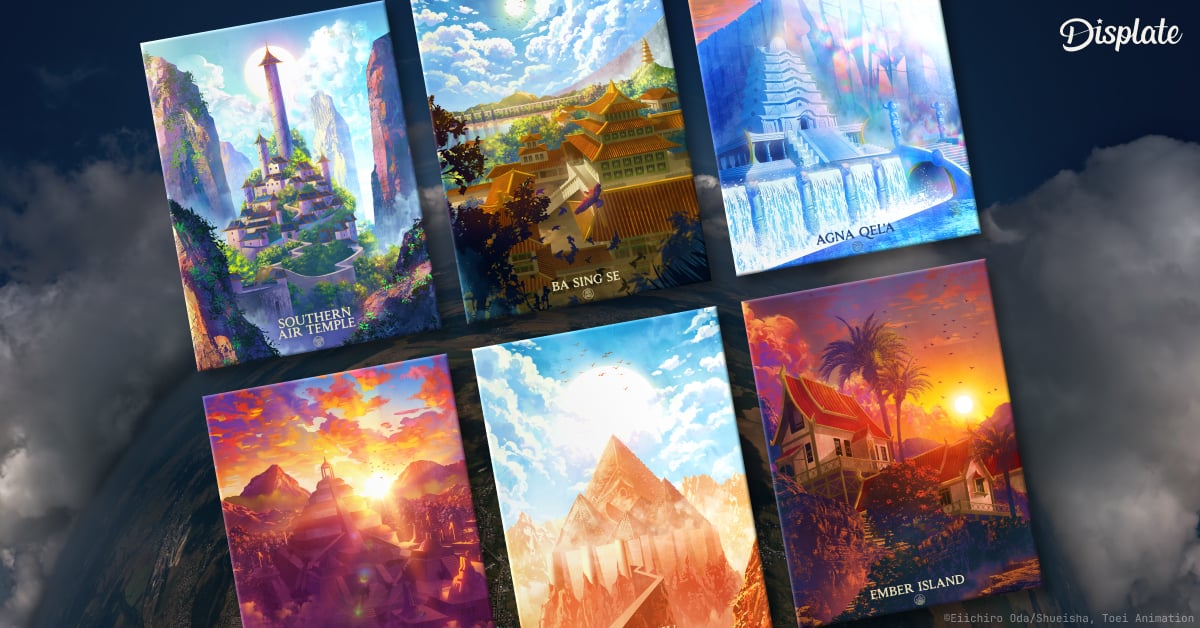
The Avatar: The Last Airbender map is instantly recognizable. Ice at the poles. One enormous Earth Kingdom. Volcanic Fire Nation islands. Air Temples tucked into places that would make most architects quietly hand back the blueprints.
And while the Avatar: The Last Airbender world is packed with memorable places, this isn’t every stop on the map. We’d be here until the next Sozin’s Comet.
Instead, we’re focusing on the locations that do the most for worldbuilding, the story, and the characters who pass through them.
So, unfold the map, make sure Appa is properly fed, and let’s go sightseeing!
Reading the Avatar: The Last Airbender World Map
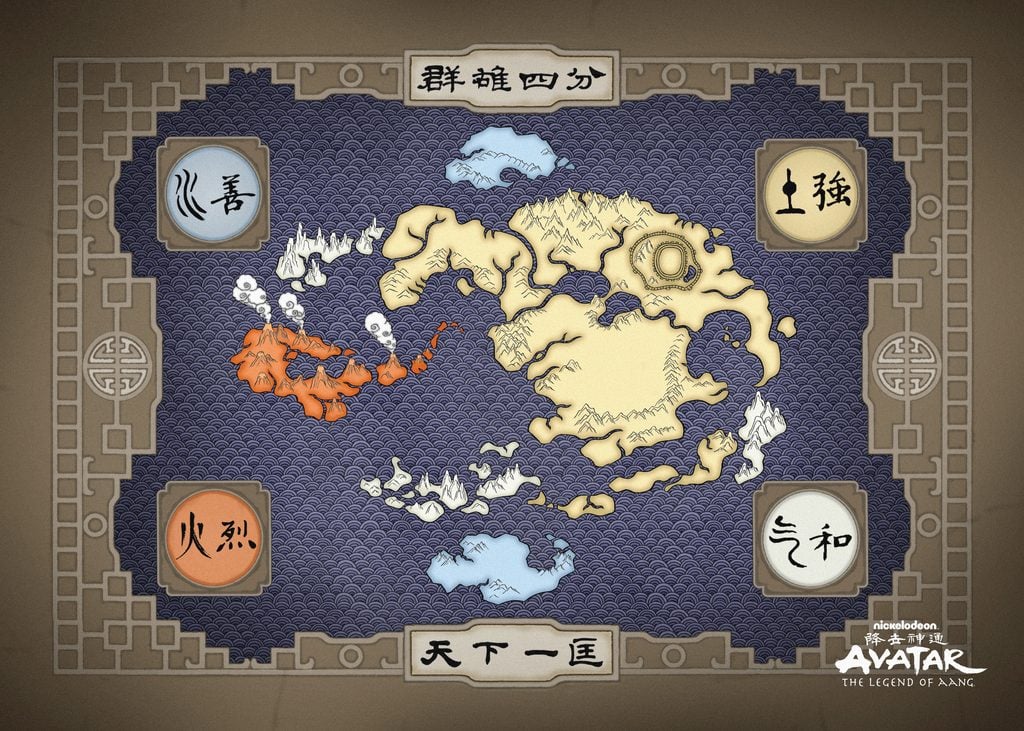
The world is divided between four major cultures: the Earth Kingdom, Fire Nation, Water Tribes, and Air Nomads, with the Earth Kingdom covering by far the largest landmass.
What makes the Avatar: The Last Airbender world map so memorable is how clearly those cultures are written into the landscape.
Earth Kingdom cities rise from the mountains and disappear behind enormous stone walls. Fire Nation settlements occupy volcanic islands. The Water Tribes shape ice into homes, fortifications, and cities at opposite ends of the world, while Air Nomad temples cling to remote peaks and cliffs.
Bending isn’t just something characters use in a fight. It influences how people build, travel, defend themselves, and interact with their environment.
That’s where our tour begins.
Iconic Locations Across the Avatar World
Ba Sing Se: The City That Built a Wall Around Everything
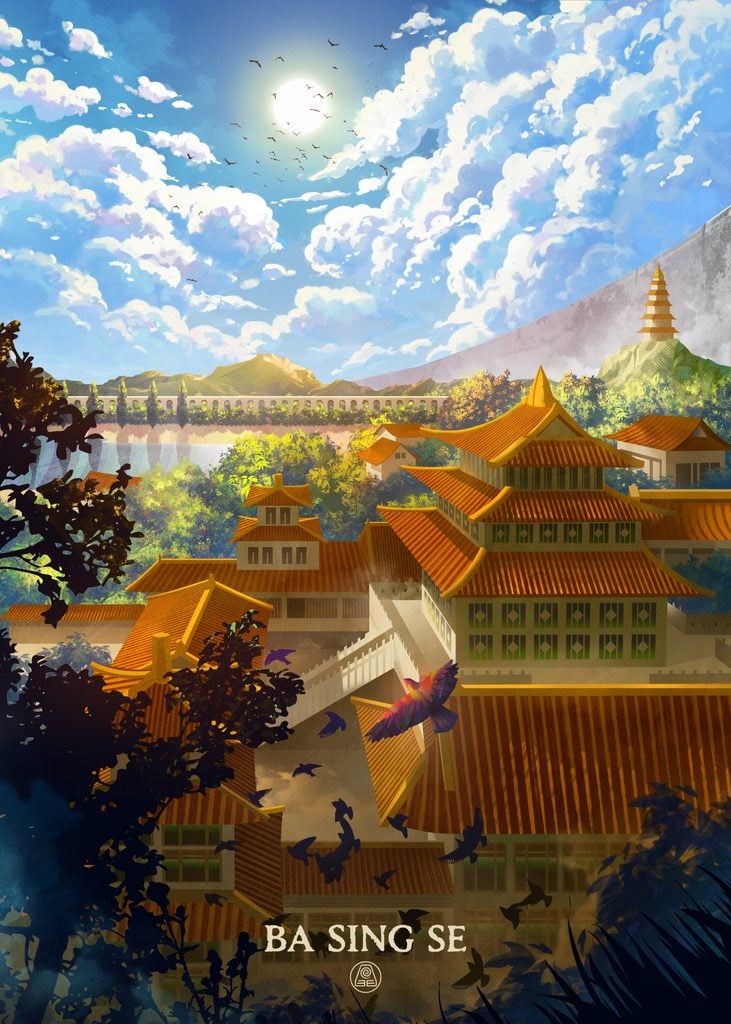
Ba Sing Se does not really do subtle.
The Earth Kingdom capital is enclosed by colossal stone walls and divided into social rings, with wealth and power increasing the further inward you go.
It is an earthbender city in every sense. Stone becomes architecture, transport, defense, and a very effective way for the Dai Li to keep everything neatly under control.
Local reminder: there is no war in Ba Sing Se.
Omashu: Earthbending Meets Urban Engineering
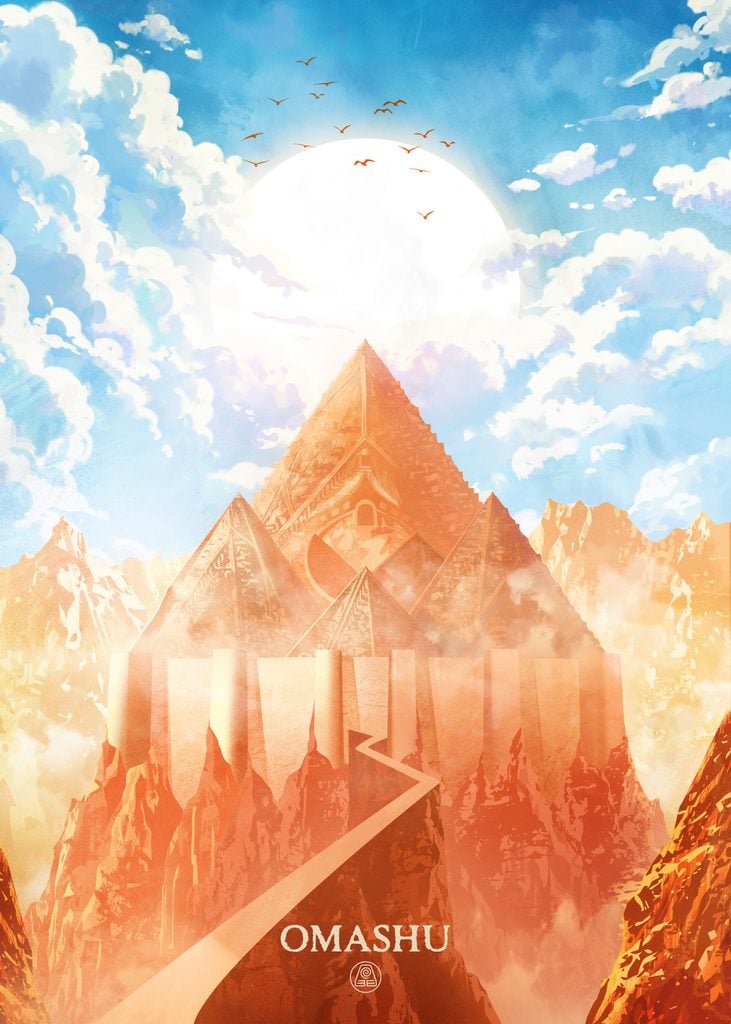
If Ba Sing Se shows earthbending as monumental power, Omashu shows what happens when earthbenders get creative with infrastructure.
Built into a steep mountain, the city is packed with stone towers, bridges, ramps, and chutes, including its famous gravity-powered delivery system.
It feels like a city that could only exist in the Avatar world: part fortress, part transport network, part accidental theme park.
Travel tip: keep your hands inside the mail cart at all times.
Kyoshi Island: Small Island, Massive Legacy
Kyoshi Island might be small, but its identity is huge.
Avatar Kyoshi’s legacy shapes the island’s culture, most visibly through the Kyoshi Warriors and their unmistakable fans, face paint, and uniforms.
Its isolation also gives the island a distinct character from the Earth Kingdom mainland, fitting for a place that was, quite literally, separated from it by an Avatar.
Local history: when Kyoshi wanted some distance, she really committed to it.
The Fire Nation Capital: Power Inside a Volcano
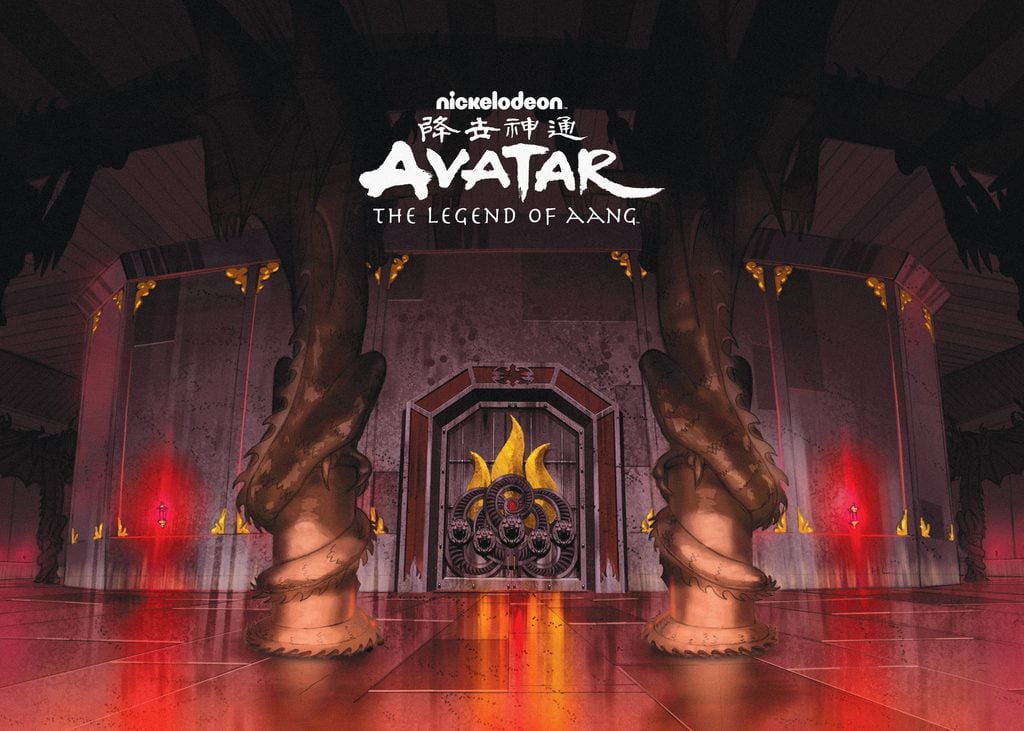
The Fire Nation capital sits inside a volcanic caldera, with the royal palace positioned at its center.
The crater walls create natural defenses, while the city’s layout keeps political power concentrated around the Fire Lord and ruling elite.
Volcanic geography, imposing architecture, and military control all combine to make it unmistakably Fire Nation.
Travel advice: maybe don’t annoy anyone who can bend lightning.
Crescent Island: Roku’s Fire Temple
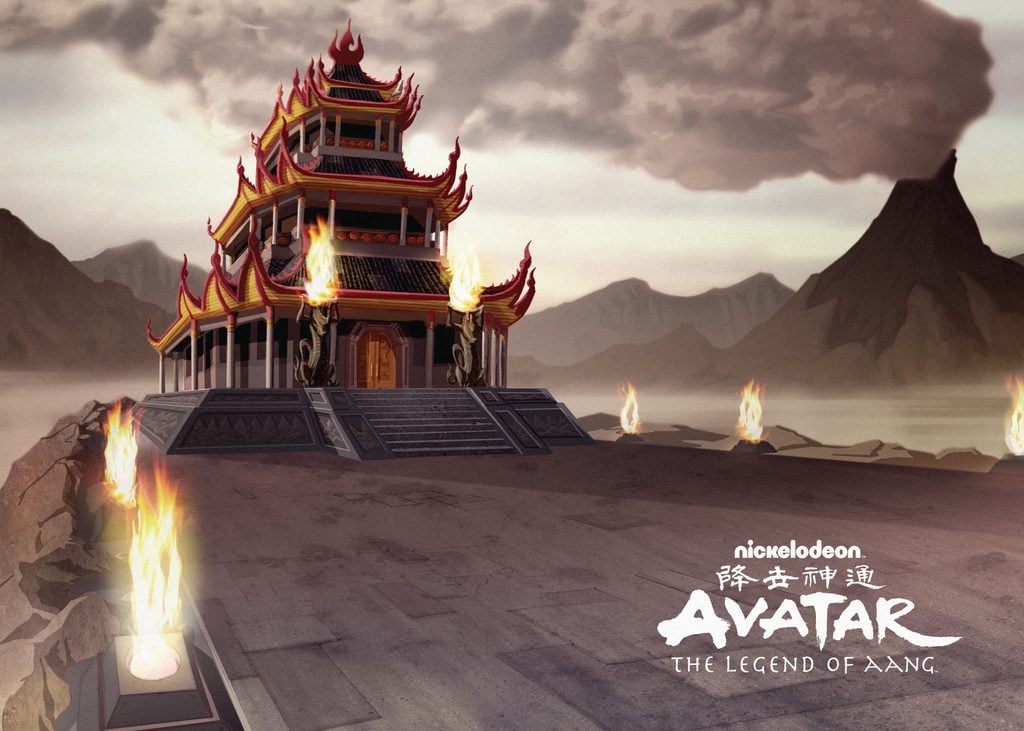
Crescent Island is home to Roku’s Fire Temple, one of the first places where Aang’s connection to the previous Avatar becomes something immediate rather than historical.
Set against a volcanic landscape, the temple feels perfectly Fire Nation: spiritual, dramatic, and never very far from actual fire.
Worth keeping in mind: this is one family reunion you really don’t want to schedule near an active volcano.
The Northern Water Tribe: Ice Architecture at Full Scale
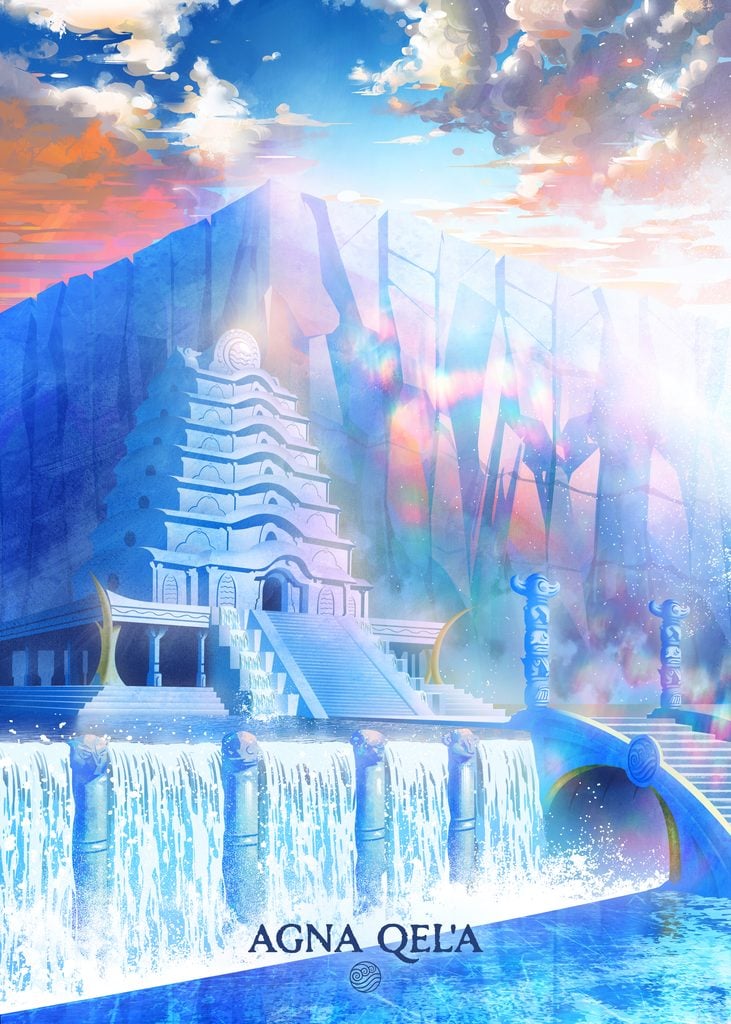
At the northern edge of the world, Agna Qel’a turns ice and water into something close to a fortress-city.
Walls, towers, bridges, and canals all feel built around waterbending rather than added on top of it. The city moves with its environment, using ice as architecture and waterways as part of everyday life.
Then, hidden at its heart, is the Spirit Oasis, calm, sacred, and home to the physical forms of the Moon and Ocean Spirits.
So yes, the Northern Water Tribe has spectacular architecture, plus two extremely important fish at the center of it all.
The Southern Water Tribe: A Similar World With Bigger Stakes
The Southern Water Tribe Aang first encounters could hardly look more different.
Decades of Fire Nation raids have left a much smaller community of igloos and tents, with few waterbenders remaining.
The scale is important to Katara and Sokka’s story. They don’t begin their journey in a powerful capital or fortified city; they come from a remote community that has already lost a great deal.
That makes every later stop feel bigger, because the adventure starts somewhere small, isolated, and already shaped by the war.
Travel note: one iceberg is all it takes to change the itinerary.
The Southern Air Temple: Aang’s Lost Home
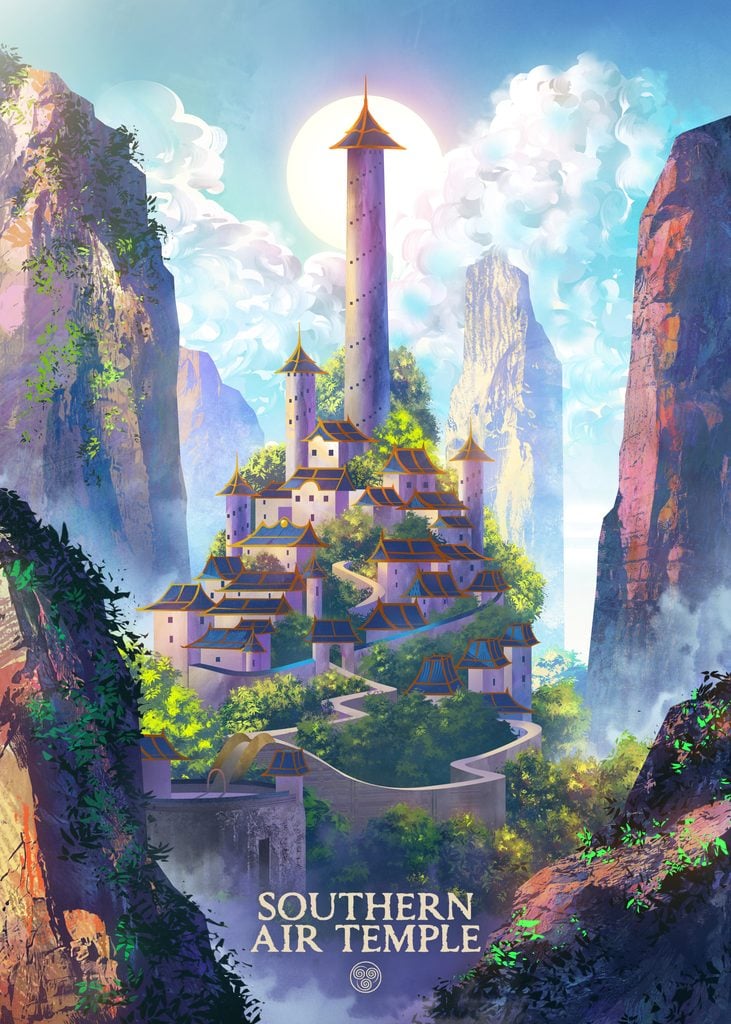
Few locations carry as much emotional weight as the Southern Air Temple.
Built high in a jagged mountain range, it was Aang’s childhood home and one of the great sanctuaries of the Air Nomads.
Its remote position reflects the culture that created it: open skies, extreme heights, and terrain most visitors would struggle to reach without a flying bison.
When Aang returns, though, the temple becomes more than an architectural wonder. The empty halls turn the destruction of the Air Nomads from distant history into something painfully personal.
The view hasn’t changed. Everything else has.
The Western Air Temple: Avatar Architecture Gets Weird
The Western Air Temple takes Air Nomad architecture in a completely different direction.
Instead of sitting on top of a mountain, its towers hang upside down beneath a cliff, using the landscape rather than trying to tame it.
It is spectacular, wildly impractical for almost anyone without access to the sky, and unmistakably Air Nomad.
Architectural note: gravity appears to have been optional.
What the Map Tells Us About the Four Nations
Look across the Avatar: The Last Airbender world map and the four nations feel less like territories and more like four different approaches to living with the environment.
The Earth Kingdom builds with weight, stone, mountains, and massive defensive structures. The Fire Nation turns volcanic terrain into political and industrial strongholds. The Water Tribes shape ice and water into settlements at the edges of the world. The Air Nomads choose places where height, wind, and isolation become part of the architecture.
Geography, bending, and culture are so closely connected that each nation is recognizable almost on sight.
You can often tell where you are before anyone says a word.
Stone walls? Earth Kingdom.
Ice palace? Water Tribe.
Volcano suspiciously close to the government buildings? Fire Nation.
Temple hanging upside down beneath a cliff?
Yeah. The Air Nomads have been here.
Bring the Four Nations to Your Walls

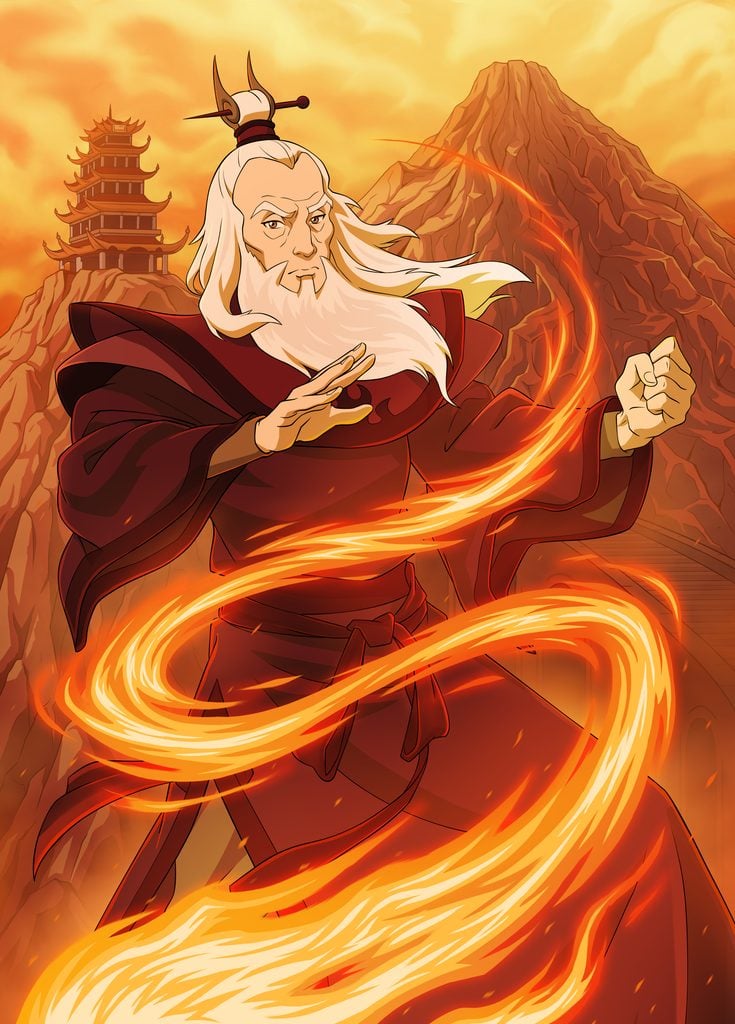

The locations of Avatar: The Last Airbender are almost as recognizable as the characters themselves.
Aang framed by an Air Temple, Kyoshi surrounded by the visual language of her island, Fire Nation reds against volcanic landscapes, or the blue-white architecture of the Water Tribes can instantly evoke a particular part of the journey.
Explore Displate’s Avatar: The Last Airbender metal posters and look for designs inspired by the four nations, elemental symbols, iconic landscapes, and unforgettable backdrops from across the series.
Because sometimes choosing your favorite part of the Avatar map is easier when you can put it on the wall.
